



To rank on Google Maps, a service business needs three things: a complete, accurate Google Business Profile, a steady flow of genuine reviews, and a website that clearly shows which services you offer in which towns. Google says local results are based on relevance, distance and prominence. You cannot change where a searcher is standing, but you can improve how relevant and prominent your business looks, and that is what moves you into the Map Pack.
Key takeaways
- Google ranks local results by relevance, distance and prominence.
- Your Google Business Profile category, services and service areas drive relevance.
- Reviews, links and mentions of your business across the web drive prominence.
- A website with a page per service and town backs up everything in your profile.
- Most businesses see movement in 4 to 8 weeks of consistent work; competitive cities take longer.
What is the Google Map Pack?
The Map Pack is the box of three businesses with a map that appears near the top of Google when someone searches for a local service, such as "pressure washing near me" or "house cleaning Charlotte". It sits above most normal results, which is why the three businesses in it get a large share of the calls.
The same ranking also drives Google Maps itself. Improve your Map Pack position and you usually improve your position in the Maps app too.
How Google ranks businesses on Maps
Google explains that local results are based mainly on three factors:
Factor
What it means
What you can control
Relevance
How well your profile matches the search
Categories, services, description, website content
Distance
How far you are from the searcher or the town searched
Your address and service areas (limited)
Prominence
How well known and trusted your business is
Reviews, links, citations, website authority
Distance is the one factor you cannot really change. That is why a business with strong relevance and prominence can outrank a closer competitor that has a thin profile and few reviews.
Step 1: Get your Google Business Profile right
Your profile is the single most important piece of local SEO. Check each of these:
- Primary category: pick the most specific one, for example "Pressure washing service" rather than "Cleaning service". This is the strongest relevance signal you control.
- Secondary categories: add the others that genuinely apply, such as "Gutter cleaning service" or "Roof cleaning".
- Services: list every service you offer, with a short description of each.
- Service areas: add the towns and cities you actually serve.
- Business name: use your real business name. Adding keywords to it breaks Google's guidelines and can get your profile suspended.
- Hours, phone and website: complete and consistent with your website.
- Photos: upload real job photos regularly, especially before-and-after shots.
Our Google Business Profile optimisation service covers this setup in detail.
Step 2: Build a steady flow of reviews
Reviews are one of the strongest prominence signals, and they also decide who people call once they see the Map Pack. What matters is not only the total number, but also how recent they are and whether they mention the service and town.
- Ask every happy customer, ideally the same day the job is finished.
- Send a direct review link by text message. It is the easiest way for customers to leave one.
- Reply to every review, good or bad, politely and quickly.
- Never buy reviews or offer rewards for them. Both break Google's rules.
Step 3: Make your website back up your profile
Google cross-checks your profile against your website. A site with one generic "services" page gives it very little to work with. A site with a page for each service, and pages for the main towns you serve, tells Google exactly what you do and where.
- One page per main service, for example house washing, roof cleaning, driveway cleaning.
- Pages for your main towns or cities, each with genuinely local content and job photos from that area.
- Your business name, address and phone number on every page, matching your profile exactly.
- LocalBusiness schema markup so Google can read your details reliably.
- Fast loading on phones, with a tap-to-call button.
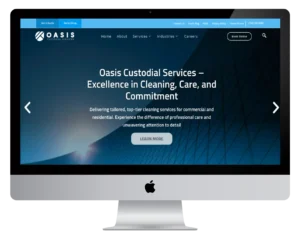
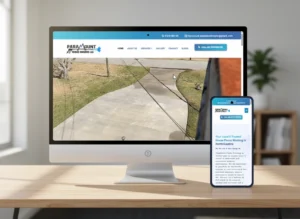
This is how we build every service business website.
Step 4: Get listed and mentioned in the right places
Citations are listings of your business name, address and phone number on other sites: directories, industry associations, local chambers of commerce. Consistent citations help Google trust your details. Links from local sources, such as a sponsor page for a local sports team or a feature in local news, add prominence.
Quality beats quantity. A handful of accurate, relevant listings and a few genuine local links are worth more than hundreds of low-quality directory entries.
Step 5: Stay active
Profiles that are updated regularly tend to perform better and convert better. Post a weekly update with a recent job, add new photos, answer questions in the Q&A section and keep your hours current, especially around holidays.
How long does it take to rank on Google Maps?
It depends on your city and competition. Fixing categories and profile details can show movement within a few weeks. Building enough reviews and authority to reach the top three in a competitive city usually takes a few months of steady work. Our guide on how long SEO takes explains the typical timeline.
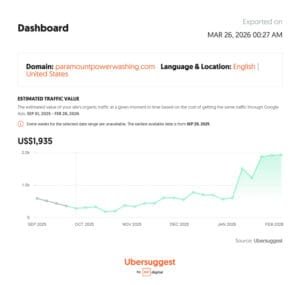
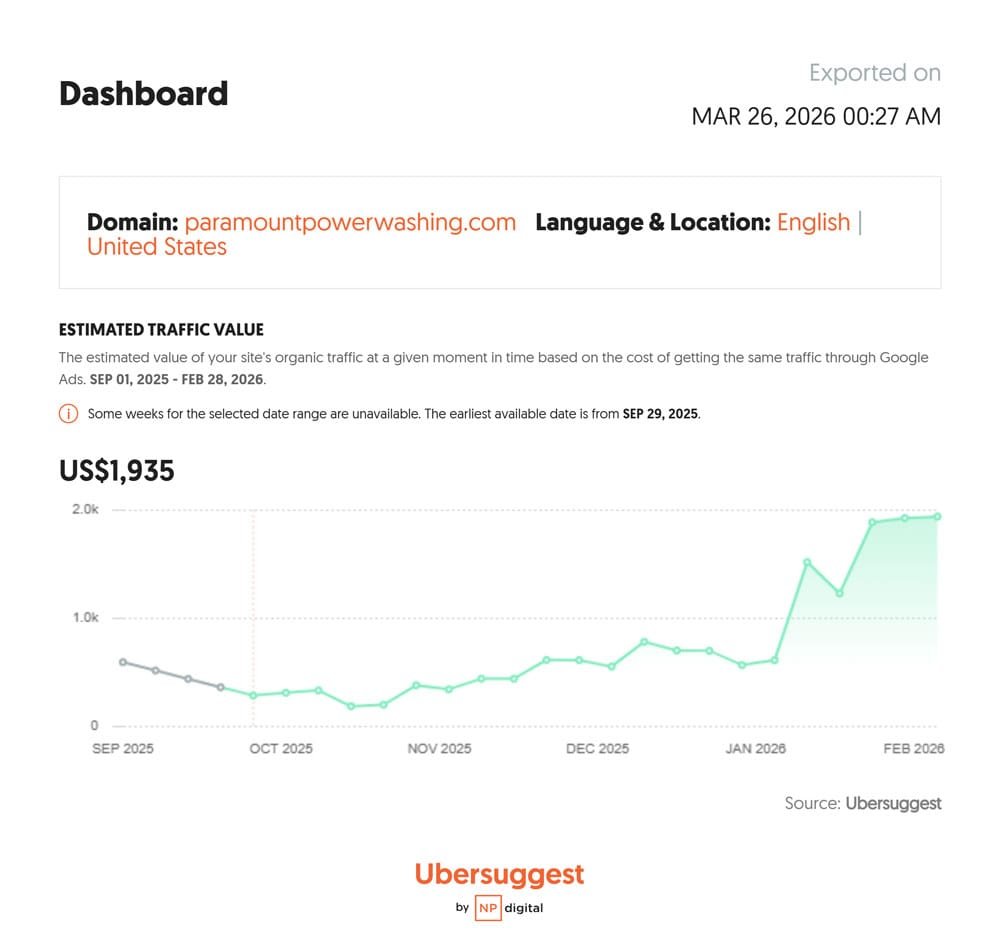
As an example, our client Paramount Power Washing in Raleigh, NC holds an average Map Pack position of 1.2 for its main services. See our local SEO service for how we get there.
Common mistakes that hold businesses back
- Choosing a broad primary category instead of the most specific one.
- Stuffing keywords or city names into the business name.
- Different phone numbers or addresses on the website, profile and directories.
- No website, or a website with no service or town pages.
- Collecting a burst of reviews and then none for months.
- Using a virtual office address, which breaks Google's guidelines for service-area businesses.
Google Maps ranking questions
How do I get my business in the Google Map Pack?
Complete and optimise your Google Business Profile with the right primary category, services and service areas, collect genuine reviews steadily, and make sure your website has pages for each service and the towns you serve.
Do reviews help Google Maps ranking?
Yes. The number, recency and quality of reviews are part of prominence, one of the three factors Google uses for local ranking. They also strongly affect whether people call you.
Can I rank on Google Maps in a city where I do not have an address?
It is harder, because distance is a ranking factor. You can still rank there in normal search results with a strong, genuinely local page for that city.
How much does it cost to rank on Google Maps?
You can do the basics yourself for free. Professional local SEO typically costs a monthly fee; our plans start at $249 a month for one city.
Want to get into the Map Pack in your town?
We optimise Google Business Profiles and run local SEO for home-service businesses, with a top-10 target in your city within 3 months.


